Professional bars are full of shiny equipment, but most classic cocktails need surprisingly little. With about ten tools you can make almost every recipe on this site. This guide explains what each tool does, what to look for when buying, and what you can use instead if you do not have it yet.
The essentials
Shaker
There are three common types:
- Boston shaker: two tins (or a tin and a glass) that fit into each other. It is what most professionals use: large, fast to chill, easy to clean. It needs a separate strainer and a little practice to seal and open.
- Cobbler shaker: three parts, with a built-in strainer and a cap. Easy for beginners, but the lid can stick when the metal gets cold, and the small strainer holes are slow.
- Parisian (French) shaker: two metal parts without a built-in strainer. Elegant and tight, but less common.
If you buy one shaker, choose a pair of weighted stainless steel tins. A large screw-top jar works as an emergency shaker.
Jigger
A double-sided measure. Accurate measuring is the single biggest step from mediocre to good cocktails, because a few millilitres of lime or syrup change the balance. Metric jiggers with 20/40 ml, 25/50 ml or 30/60 ml sides and inner markings are the most useful. See our guide to measuring and balance for why this matters.
Bar spoon
A long spoon with a twisted stem for stirring. The twist lets it rotate smoothly between your fingers, and the length reaches the bottom of a mixing glass. The bowl holds roughly 5 ml, although this varies by model, and it doubles as a measure for small amounts of syrup or liqueur. The back of the spoon is used for layering.
Strainers
- Hawthorne strainer: a flat strainer with a metal spring that sits on top of a shaker tin and holds back ice.
- Julep strainer: a perforated, spoon-shaped strainer used with a mixing glass for stirred drinks.
- Fine strainer: a small conical sieve held under the main strainer to catch ice shards, fruit pulp and herb fragments. This is called double straining and gives shaken drinks served up a clean, smooth texture.
Mixing glass
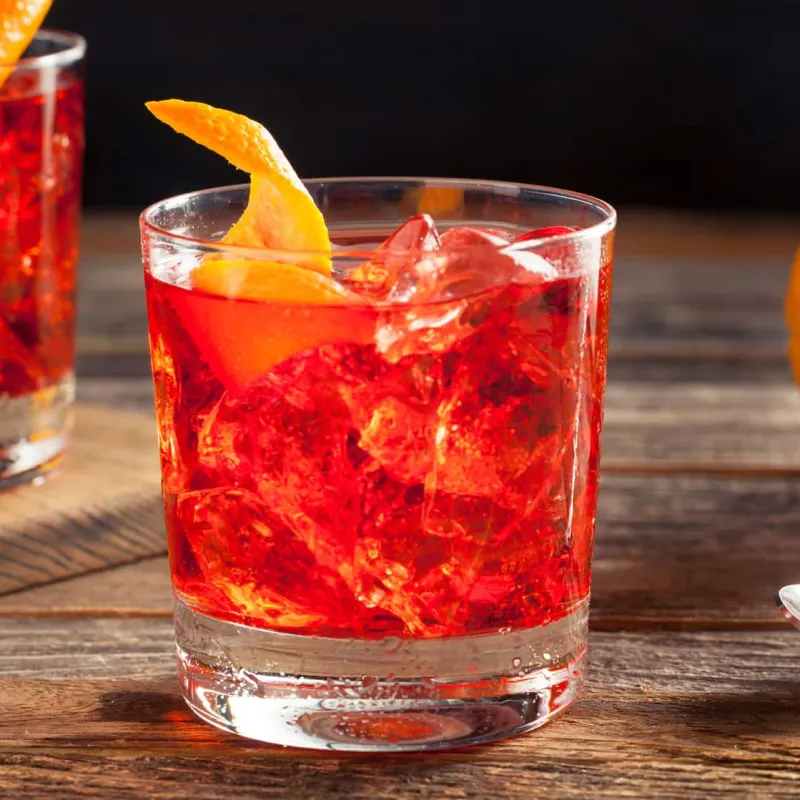
A heavy glass beaker for stirred drinks such as the Martini, the Manhattan or the Negroni. A thick base keeps it stable and a spout makes pouring clean. The bottom half of a Boston shaker works too.
Citrus press
Fresh juice is not optional in good cocktails, so a solid hand press is essential. The hinged, two-handled type is fast and presses the juice without too much bitter oil from the peel. For larger amounts, a lever press or an electric juicer saves time.
Knife, board and peeler
A small sharp knife and a cutting board for citrus wheels and wedges, plus a Y-shaped peeler for citrus twists. A good twist is a strip of peel with very little white pith, because the pith is bitter.
Useful additions
Muddler
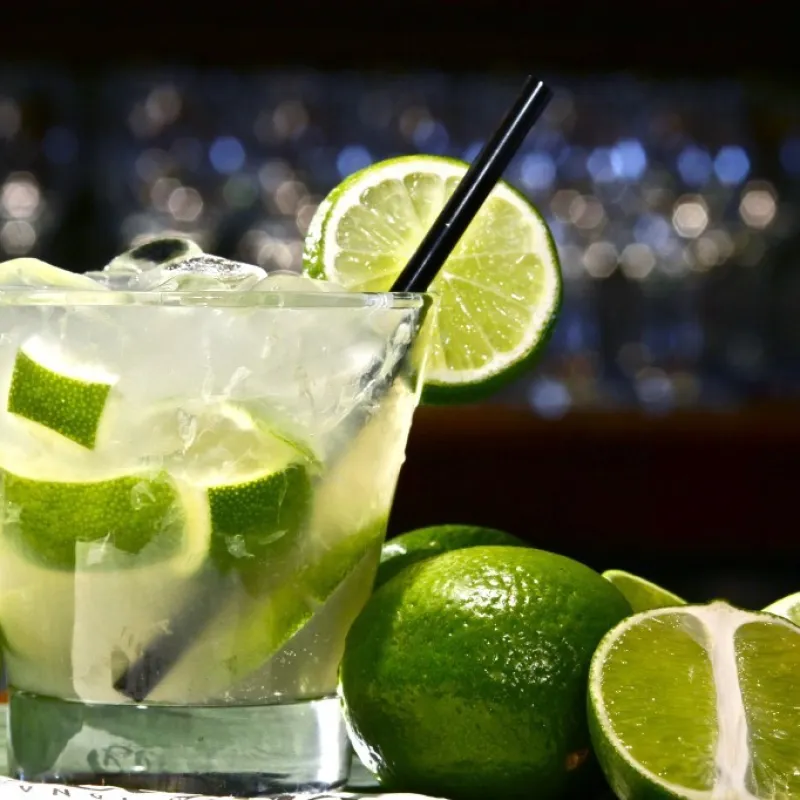
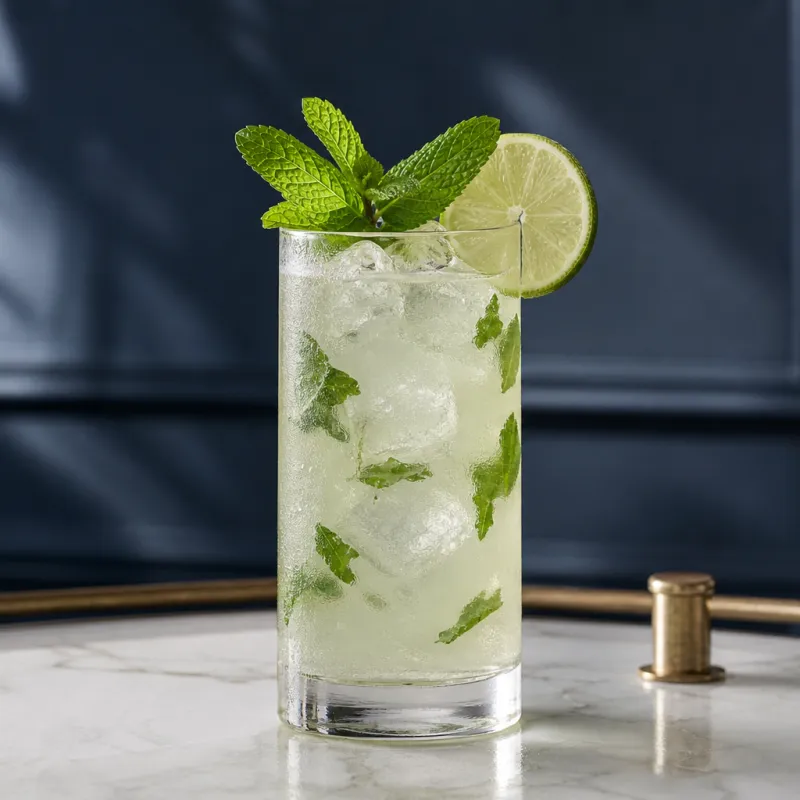
A wooden or plastic pestle for pressing fruit, sugar or herbs in the glass or shaker. Use it for the Caipirinha (lime and sugar) and the Mojito (mint, gently). Avoid lacquered wood, as the coating wears off. A wooden spoon handle can replace it.
Ice tools
An ice scoop or tongs for hygiene, silicone moulds for large cubes, and a canvas bag (often called a Lewis bag) with a wooden mallet for crushed ice. You can read more in our guide to ice in cocktails.
Dasher bottles and atomiser
Small bottles with dasher tops make bitters and tinctures easy to dose. A small spray bottle is handy for coating a glass with absinthe for a Sazerac, or with vermouth for a very dry Martini.
Blender
Needed for frozen drinks such as the frozen Daiquiri or the Piña Colada. Any strong kitchen blender that can crush ice will do.
Channel knife and zester
For long spiral twists and grated nutmeg or cinnamon on top of a flip or an eggnog.
Quality and materials
Stainless steel is the best material for almost everything: it does not react with citrus, it chills fast and it lasts for decades. Weighted tins (with a thicker base) are more stable on the counter and seal better. Avoid copper or brass-plated tools unless the plating is food-safe and of good quality, since cheap coatings wear through quickly. For jiggers, look for clear inner markings at 10, 15 and 20 ml, because many recipes use those in-between amounts. Bar spoons should be long enough for your mixing glass, around 30 cm is common, and a smooth, sealed coil is easier to clean than a loose one.
Improvising without the right tool
- No shaker: a large jar with a tight lid, filled at least halfway with ice.
- No jigger: a measuring spoon set (a tablespoon is about 15 ml) or a kitchen measuring cup with ml markings.
- No mixing glass: any sturdy glass or the base of your shaker.
- No fine strainer: a small tea strainer does the same job.
- No muddler: the handle of a wooden spoon or a small rolling pin.
What to buy first
- Shaker tins, a Hawthorne strainer and a fine strainer
- A metric jigger
- A bar spoon
- A hand citrus press
- A small knife and a peeler
With this set you can make sours, highballs and most stirred drinks. Add a mixing glass and a julep strainer when you start stirring Martinis and Manhattans regularly, and a muddler when you want to make Mojitos and Caipirinhas. You will find all tools in our bar tools section, and each recipe lists what you need.
Care
Rinse shakers and strainers straight after use, especially after drinks with cream or egg. Dry metal tools well to avoid water spots. Store wooden muddlers dry. Replace cheap cobbler shakers that no longer seal, because a leaking shaker is both messy and a waste of good ingredients.