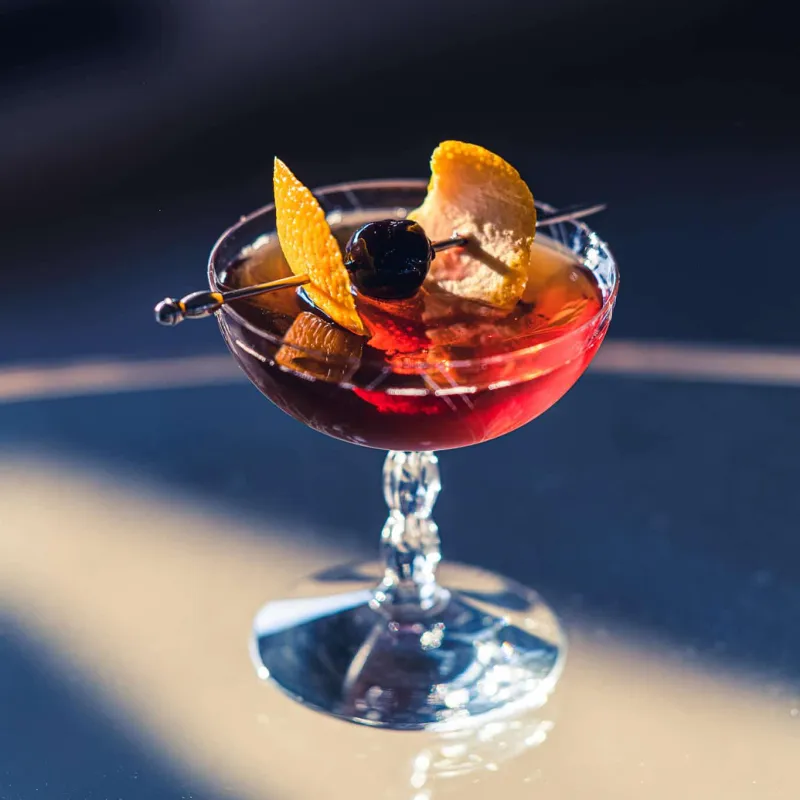
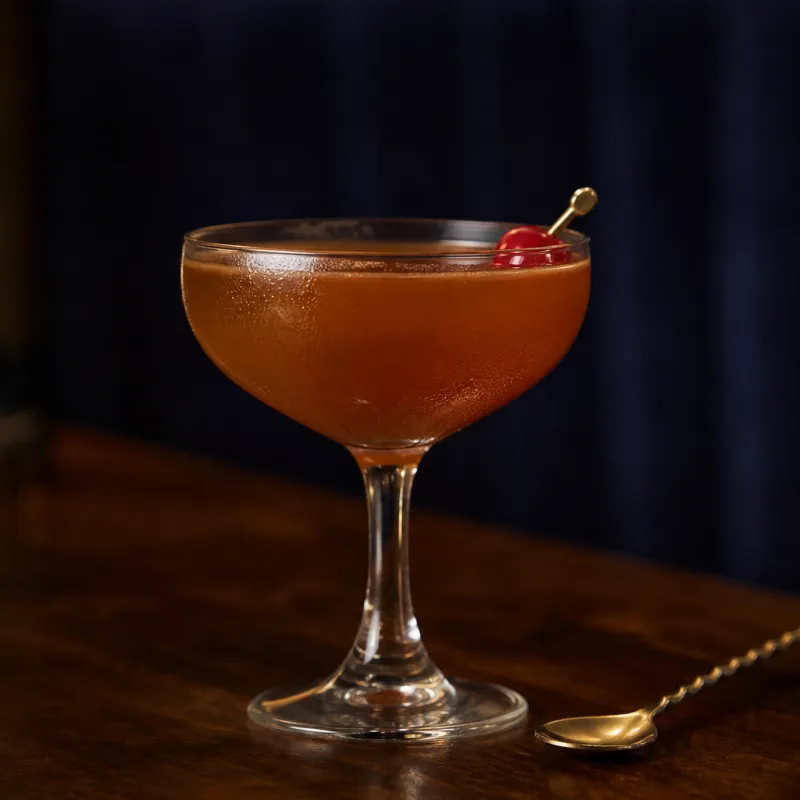
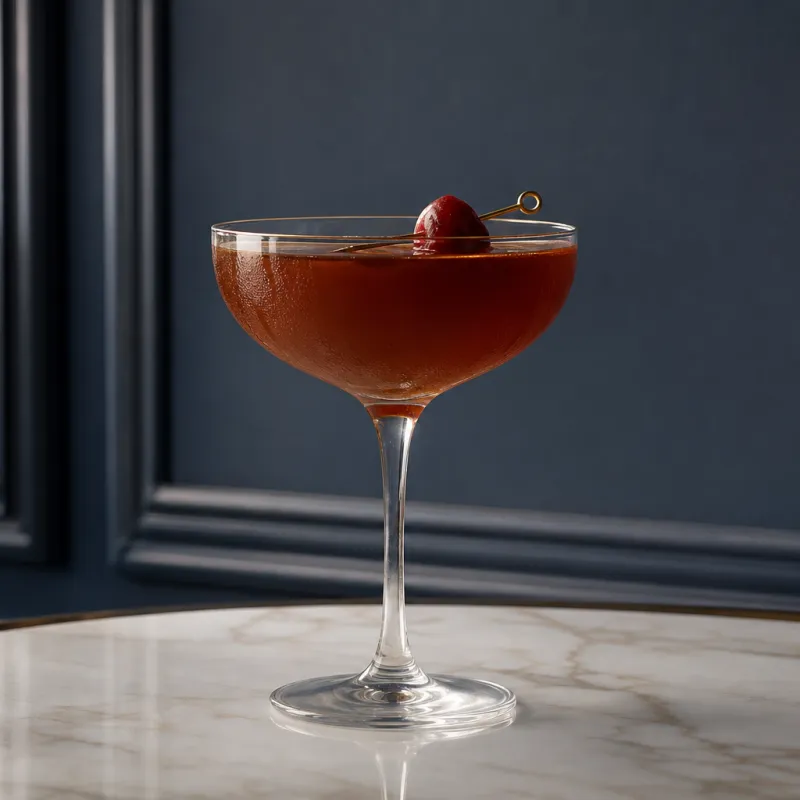
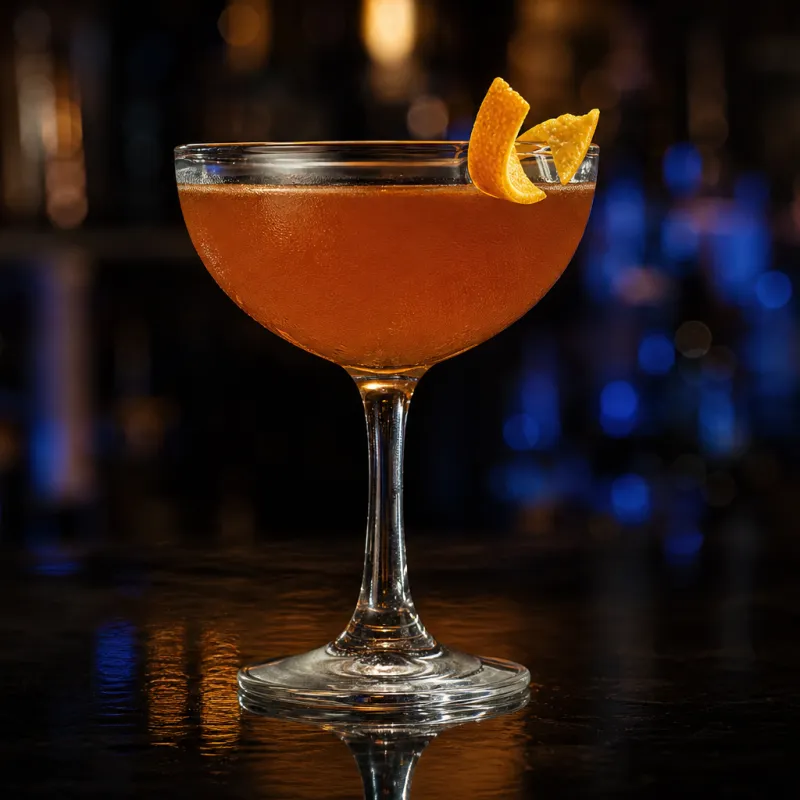
Deep amber, glossy and very cold, with a dark cherry resting at the bottom of the glass. A good Manhattan balances the spice of rye against the herbal sweetness of vermouth, and a single dash of bitters ties it all together.
4.8Editors’ rating
Taste4.8
Balance4.8
Easy to make4.4
Popularity95
Reader rating: No reader ratings yet. Be the first.
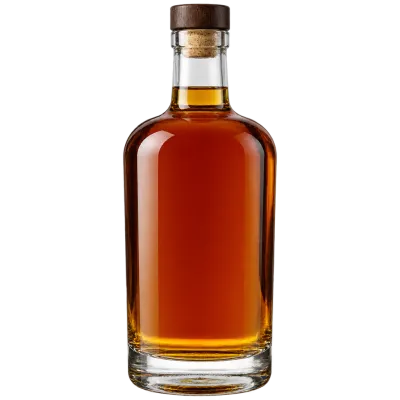
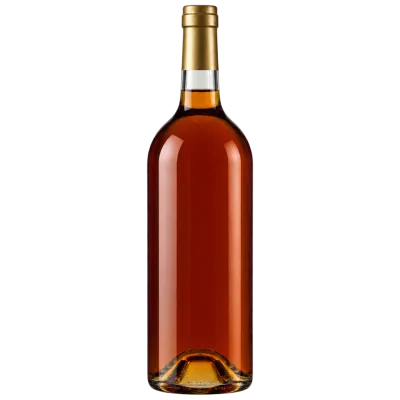
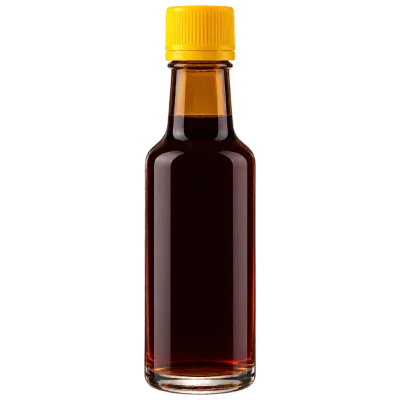
Add rye, sweet vermouth and Angostura to a mixing glass filled with ice.
Stir for 20 to 30 seconds until very cold and slightly diluted.
Strain into the chilled glass.
Garnish with a good cocktail cherry.
Link copied
Watch it made
Manhattan
Taste
Rich and spicy with dried fruit, herbal sweetness and a warming, bittersweet finish. Strong and silky.
History and origin
The Manhattan appeared in New York in the late 19th century and is named after the borough. A long popular story says it was created at the Manhattan Club for a banquet hosted by Jennie Jerome, Lady Randolph Churchill, in 1874. Historians have shown that she was in England at the time, so the tale does not hold up, although the club may still have played a role.
What is certain is that the drink was in print by the mid-1880s, including in O. H. Byron's bar guide of 1884, and that it quickly became one of the defining American cocktails. Rye was the usual whiskey then; bourbon became common later. The IBA lists the Manhattan among its unforgettables.
Bartender tips
Use fresh vermouth stored in the fridge; oxidized vermouth is the most common reason for a dull Manhattan.
Never shake it: stirring keeps the drink clear, silky and properly diluted.
Try a rye around 45 to 50 percent alcohol so the whiskey stands up to the vermouth.