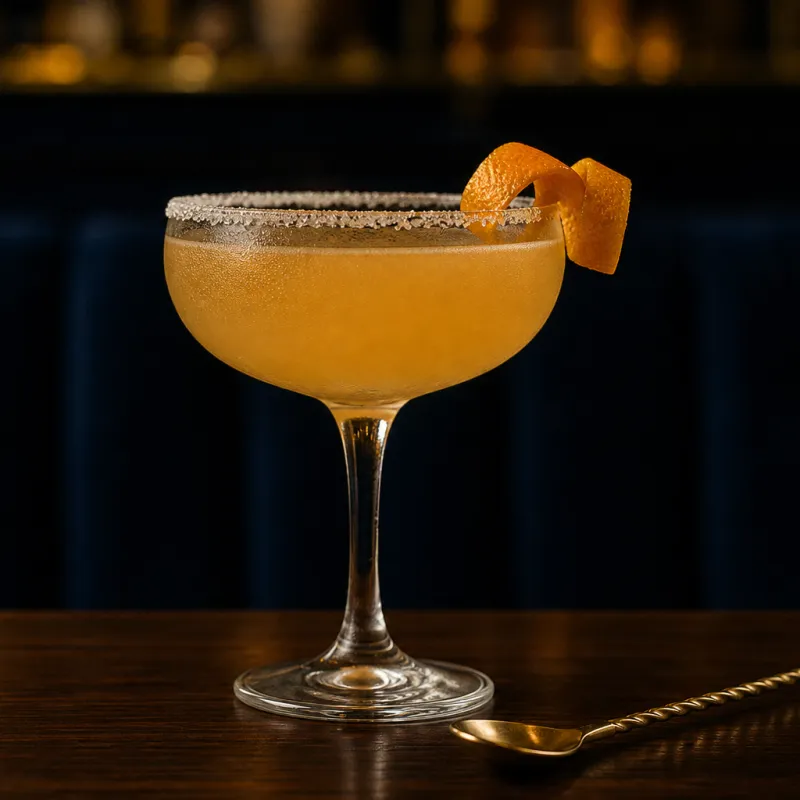
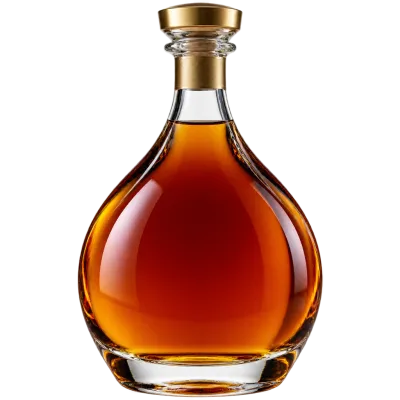
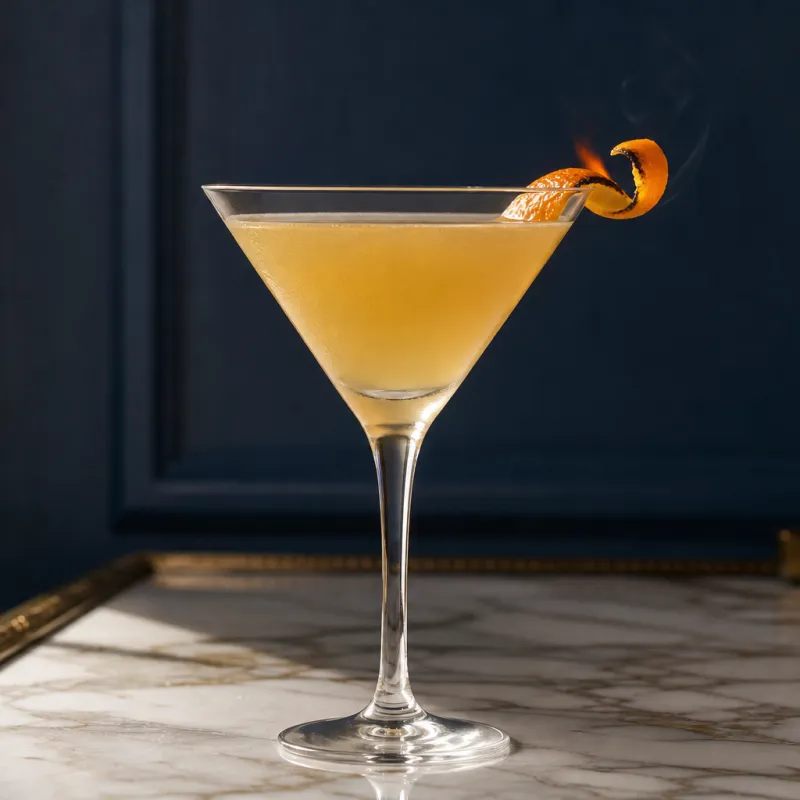
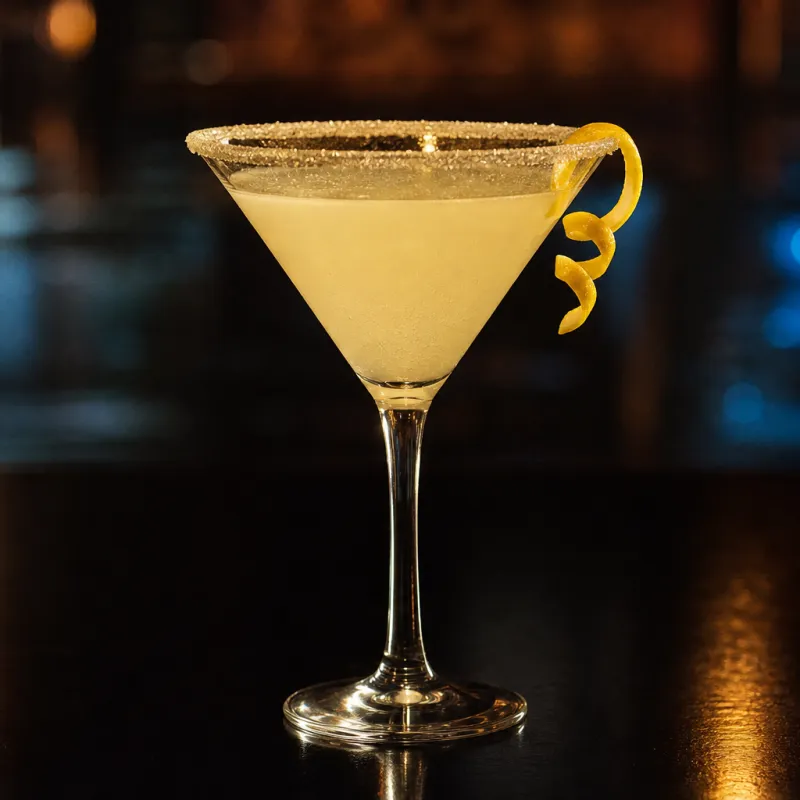
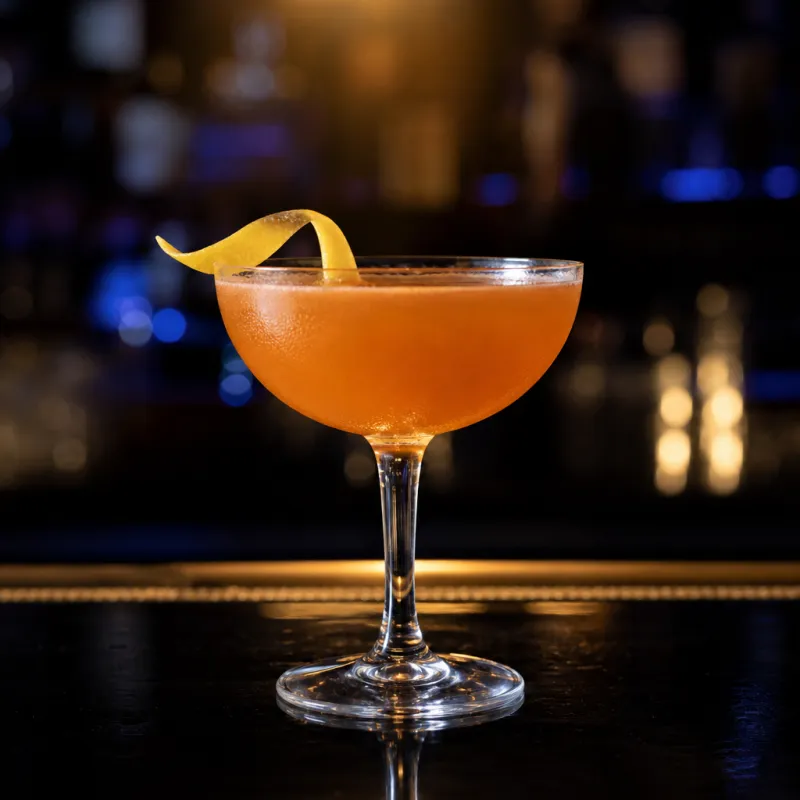
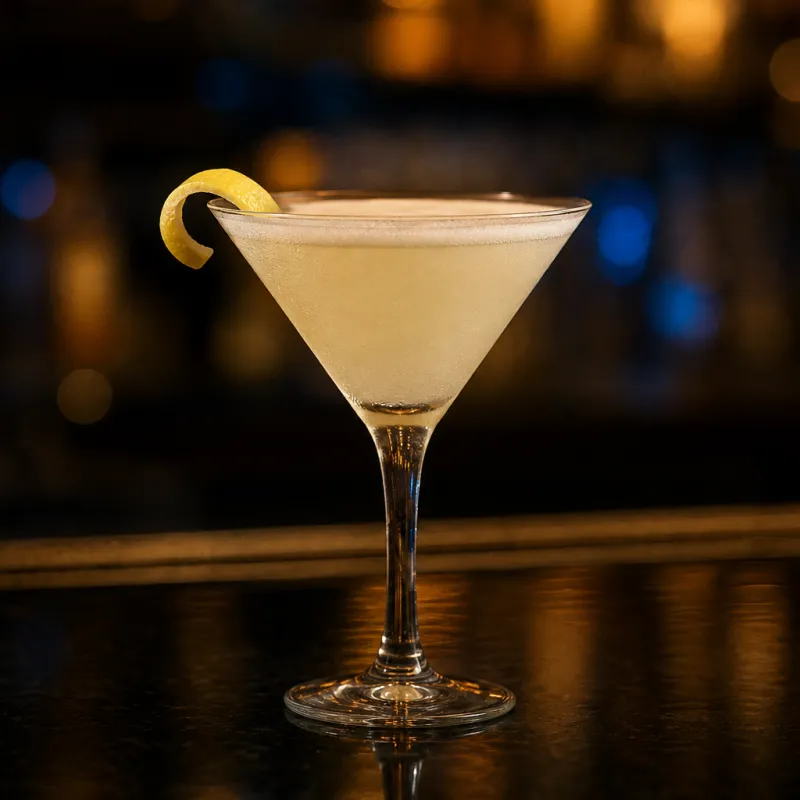
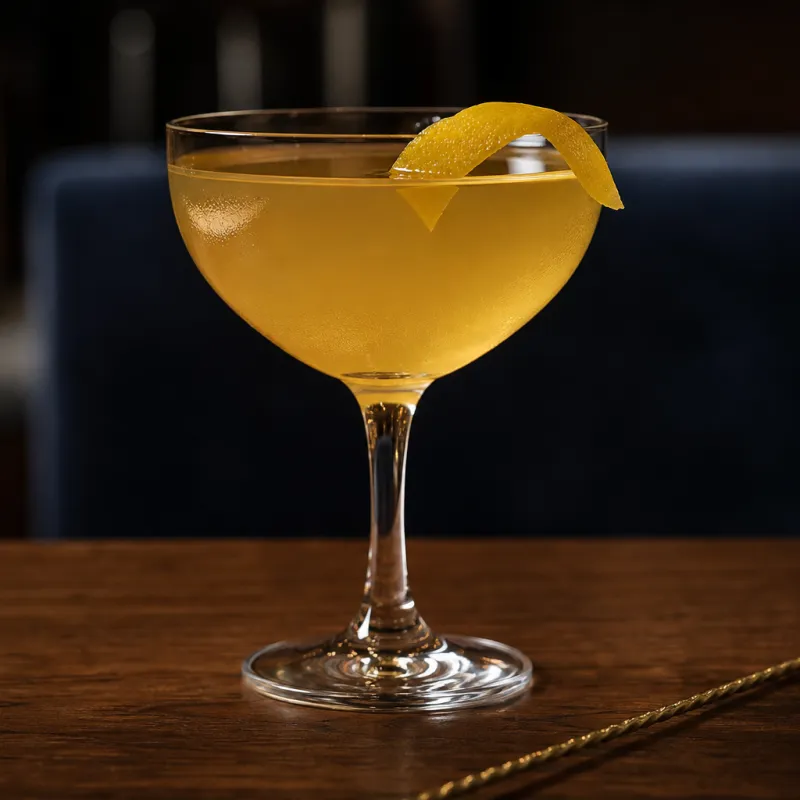
Cognac's dried fruit and oak, sweet orange from the triple sec and sharp lemon come together in a drink that is rich and refreshing at once. A thin sugar rim softens each sip, if you like your sour a touch rounder.
4.6Editors’ rating
Taste4.6
Balance4.5
Easy to make4.4
Popularity80
Reader rating: No reader ratings yet. Be the first.
Garnish: Orange twist, sugar rim optional · Ice: Served up, no ice
Method
If you want a sugar rim, moisten half the outer rim of a chilled coupe with lemon and dip it into caster sugar.
Add cognac, triple sec and lemon juice to a shaker.
Fill with ice and shake hard for 12 to 15 seconds.
Double strain into the prepared coupe.
Express an orange twist over the drink and use it as garnish.
Link copied
Watch it made
Sidecar
Taste
Bright and tart with ripe orange, dried fruit and a warm cognac finish. Silky, strong and very well balanced.
History and origin
The Sidecar appears in print in 1922 in two London books: Harry MacElhone's Harry's ABC of Mixing Cocktails and Robert Vermeire's Cocktails: How to Mix Them. Both gave it as equal parts brandy, Cointreau and lemon juice. Vermeire noted that it was very popular in France, and the early sources connect it with Pat MacGarry, the bartender at Buck's Club in London.
The most repeated story says it was named after an army officer who arrived at a Paris bar in the sidecar of a motorcycle. It is a good tale, but nobody has been able to prove it.
The drink belongs to the family of sours with orange liqueur, closely related to the older Brandy Crusta and to later drinks such as the Margarita and the White Lady. Over time bartenders moved away from equal parts toward a more cognac-heavy ratio, as in today's IBA specification.
Bartender tips
A VS or VSOP cognac is ideal; very old cognacs lose their nuances among the citrus.
Taste your lemons: if they are very sour, add a barspoon of simple syrup.
Rim only half the glass so the drinker can choose each sip with or without sugar.