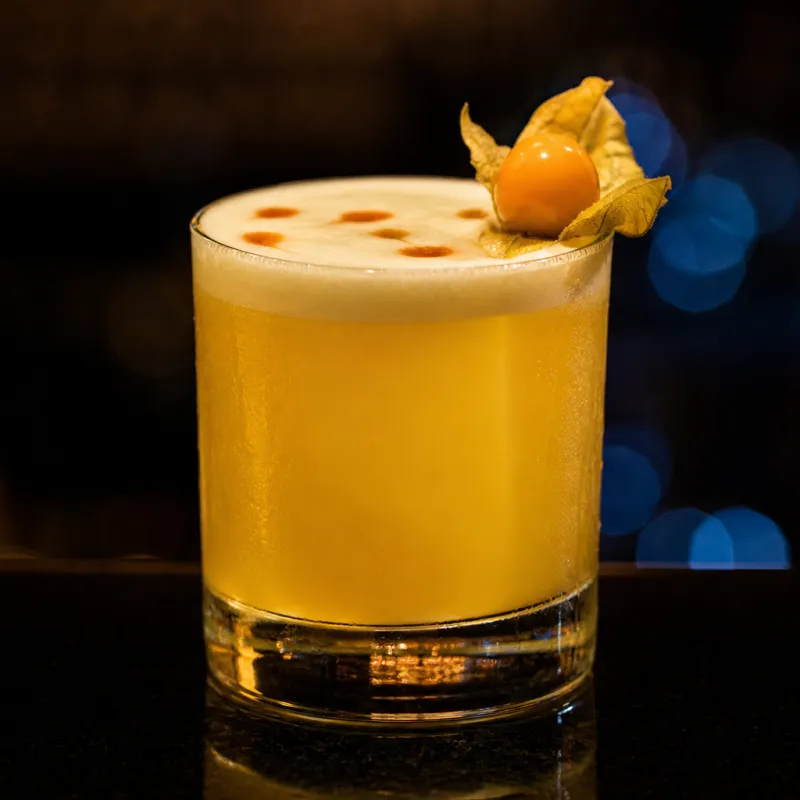
Aguaymanto, the tangy golden berry Europeans know as physalis, brings a flavour somewhere between passion fruit, gooseberry and tomato. Shaken with pisco, lime and egg white, it gives the Pisco Sour a juicy, golden twist.
4.1Editors’ rating
Taste4.2
Balance4.1
Easy to make2.6
Popularity10
Reader rating: No reader ratings yet. Be the first.
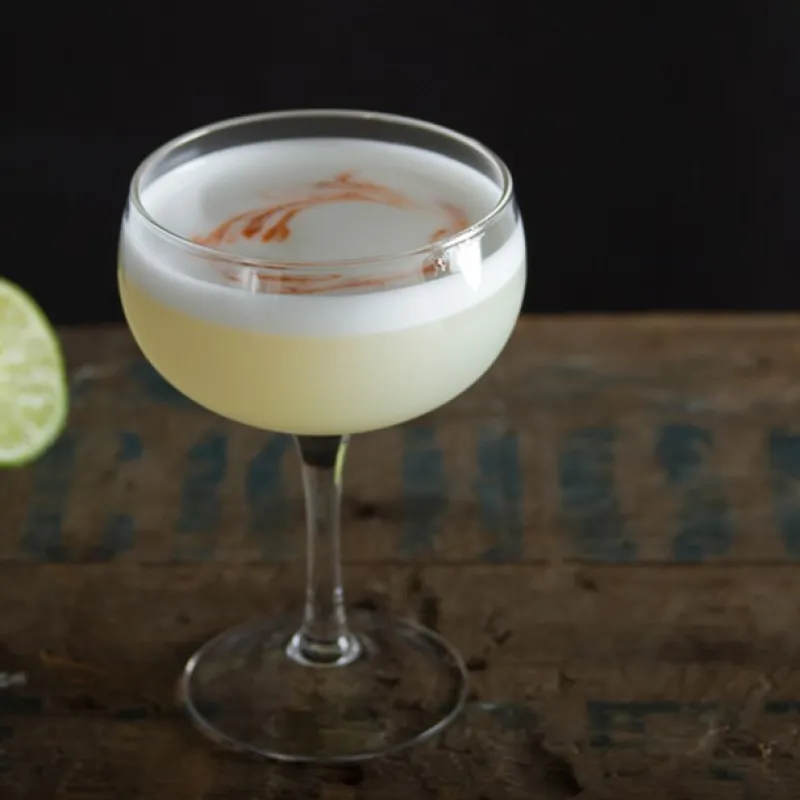
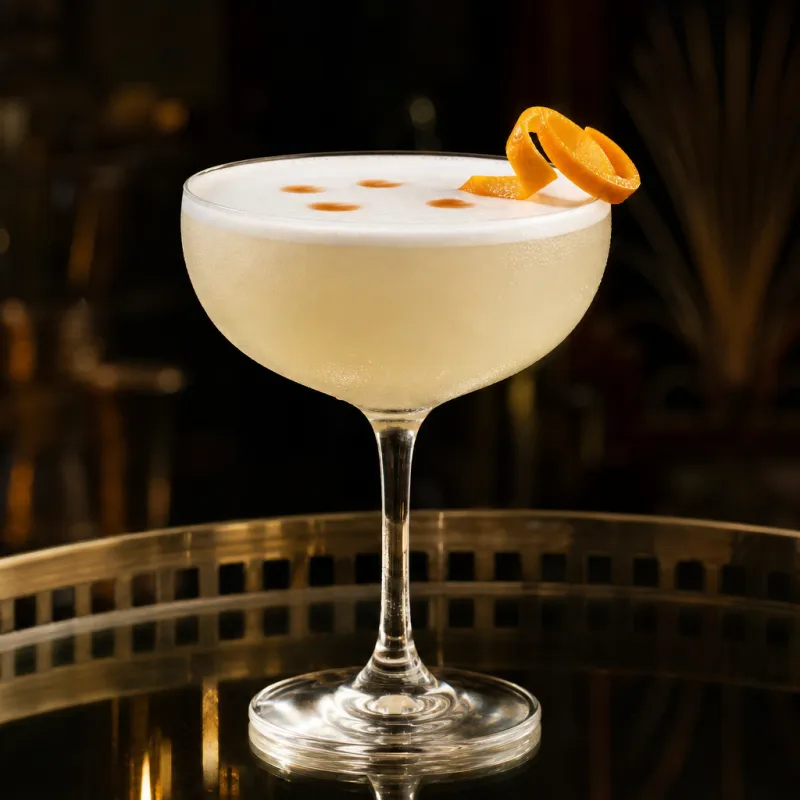
Garnish: Angostura drops and a golden berry · Ice: Served up, no ice
Method
If using fresh berries, muddle them in the shaker first.
Add pisco, aguaymanto juice, lime juice, syrup and egg white and dry shake for 10 seconds.
Fill with ice and shake hard for 12 to 15 seconds.
Double strain into a chilled rocks glass without ice.
Let the foam settle, then place three drops of Angostura on top.
Link copied
Watch it made
Aguaymanto Sour
Taste
Tart and fruity with tropical, slightly tomato-like berry notes, grape character from the pisco and a creamy, airy foam. Medium strength.
History and origin
Aguaymanto is the Peruvian name for Physalis peruviana, the golden berry or Cape gooseberry, which grows in the Andes and is widely used in Peruvian juices, jams and desserts. Fruit sours ("sours de frutas") are a popular way for Peruvian bars to show off local produce, with passion fruit, coca leaf and aguaymanto among the common flavours.
The Aguaymanto Sour follows the structure of the Pisco Sour, Peru's national cocktail: pisco, lime, sugar syrup and egg white, finished with drops of Angostura bitters on the foam. The fruit version has no known single inventor; it is one of many modern variations built on that classic template.
Bartender tips
Peruvian bars often make sours in a blender with ice, which gives an even thicker foam; blend briefly so the drink does not turn watery.
Golden berries vary in acidity: taste and adjust the lime and syrup in 5 ml steps.
Fine straining is essential if you muddle fresh berries, as the tiny seeds spoil the foam.