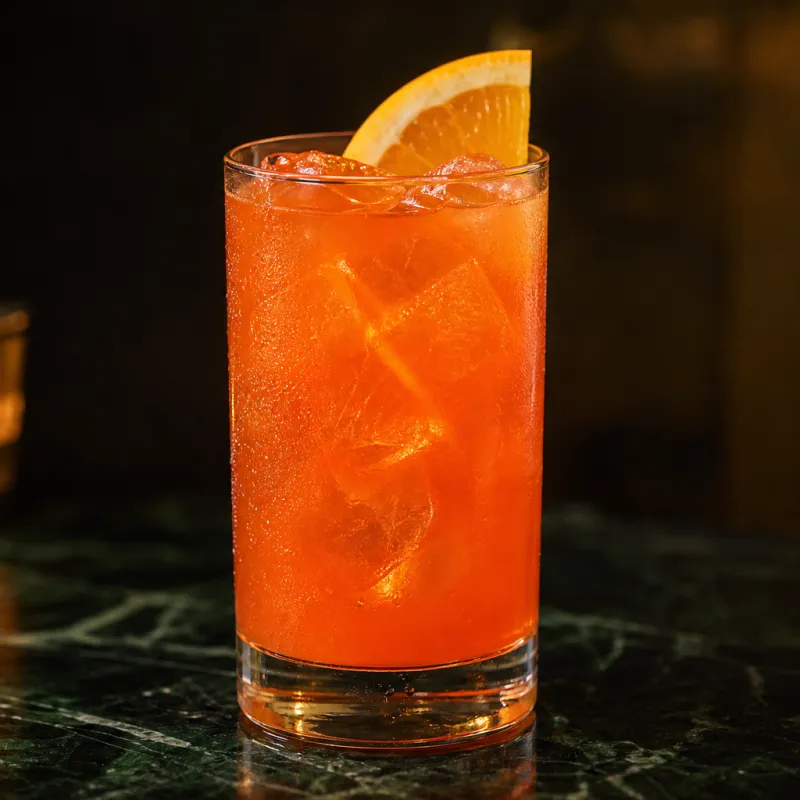
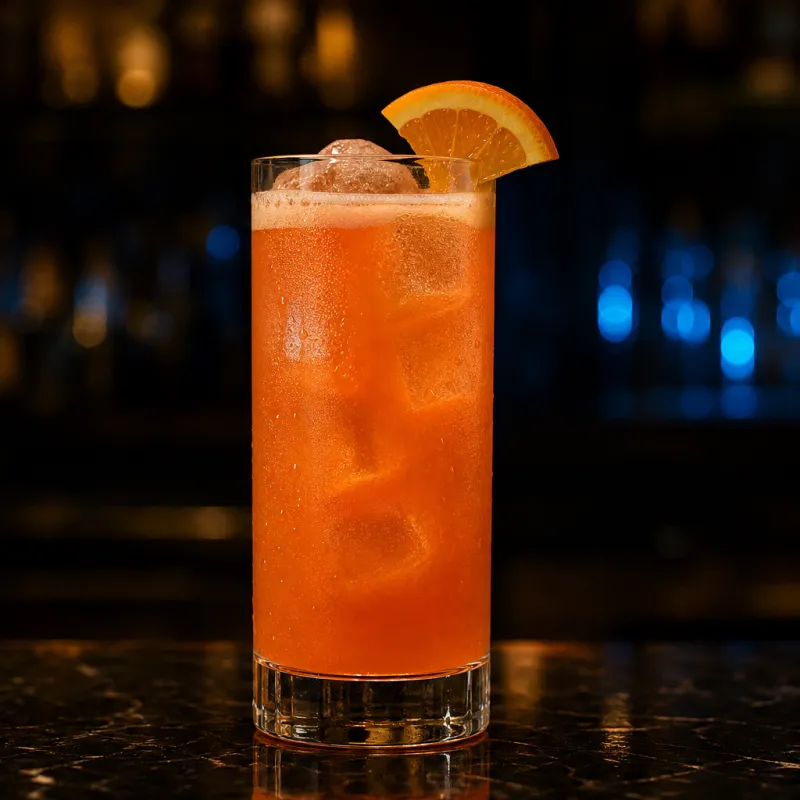
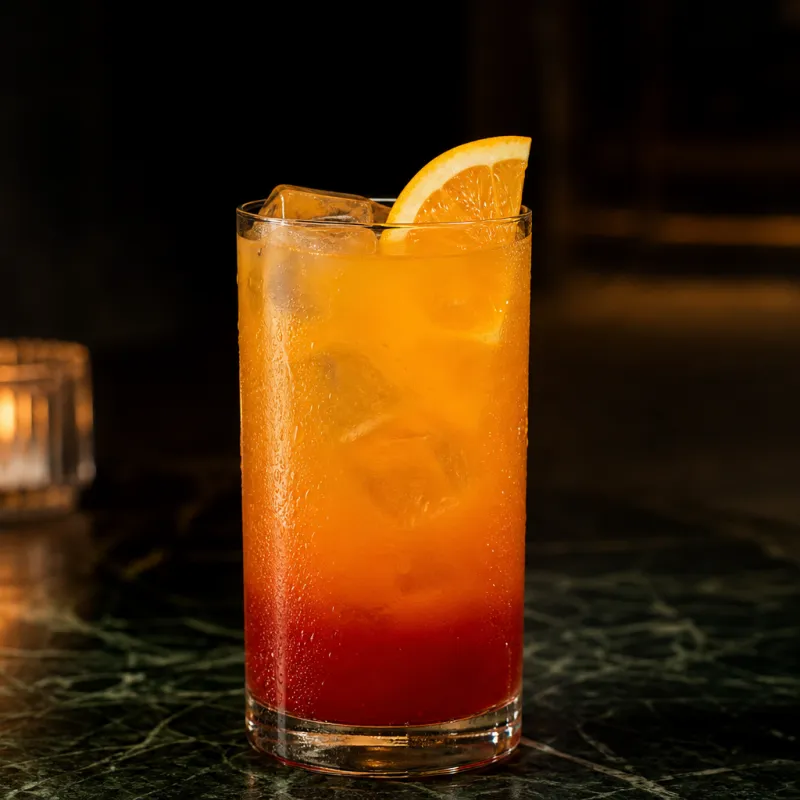
Few drinks are easier and few look better: Campari's deep red swirling into bright orange juice. Fresh juice turns the bitterness soft and fruity, making this one of the friendliest ways into Italian bitters.
3.8Editors’ rating
Taste3.9
Balance3.8
Easy to make5
Popularity65
Reader rating: No reader ratings yet. Be the first.
Juicy sweet orange first, then Campari's bitter orange peel and herbs. Light, fruity and low in alcohol.
History and origin
In Italy the drink is called Garibaldi, after Giuseppe Garibaldi, the general of Italian unification. The usual explanation is symbolic: Campari from Milan in the north meets oranges from Sicily and the south, and the red recalls the red shirts worn by Garibaldi's volunteers.
Campari itself was created by Gaspare Campari in the 1860s and has been served as an aperitivo with soda or juice ever since. In German-speaking countries the drink is simply ordered as Campari Orange. Its modern revival owes a lot to bartenders who use freshly squeezed juice aerated at high-speed, a style the New York bar Dante made famous as the Fluffy Garibaldi.
Bartender tips
Fresh juice makes all the difference; carton juice gives a flat, sweet drink.
For the fluffy version, blitz the orange juice in a blender or with a milk frother for a few seconds before pouring: it becomes light and foamy.
Adjust to taste: 1 part Campari to 2 parts juice for bitter fans, 1 to 4 for a softer drink.
Variations
Fluffy Garibaldi
Aerate fresh orange juice in a high-speed blender and pour it over Campari on ice.
Aperol Orange
Aperol instead of Campari: lighter, sweeter and less bitter.
Frequently asked questions
Is Campari Orange the same as a Garibaldi?
Yes. Garibaldi is the Italian name for Campari with orange juice.
How strong is Campari Orange?
With 40 ml Campari and 120 ml juice it has about 5 to 6% ABV.
Should I stir or layer it?
A quick stir mixes it evenly. Pour the Campari last and slowly if you want a red layer at the bottom for show.