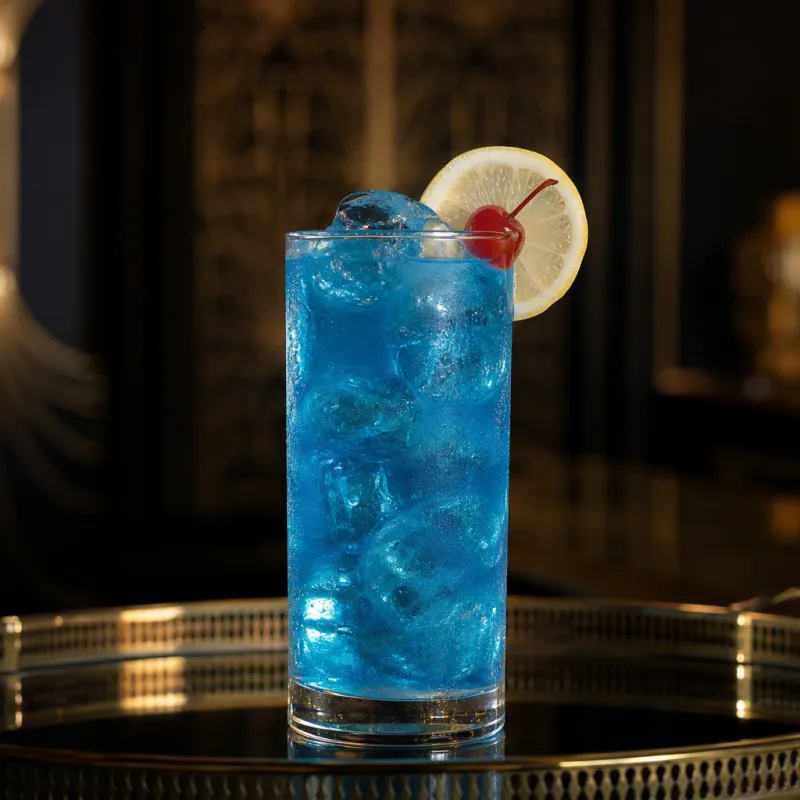
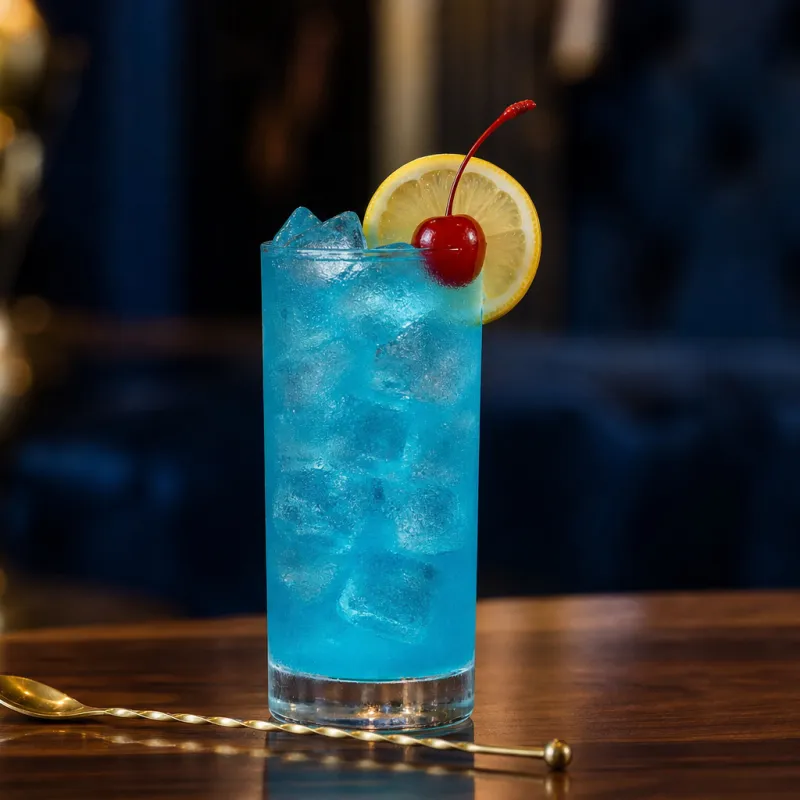
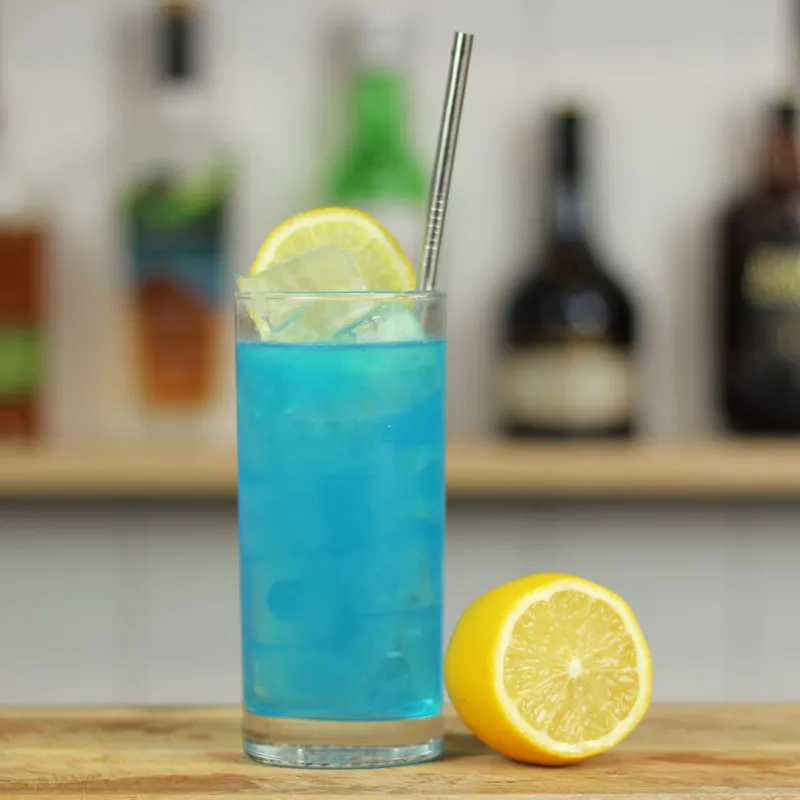
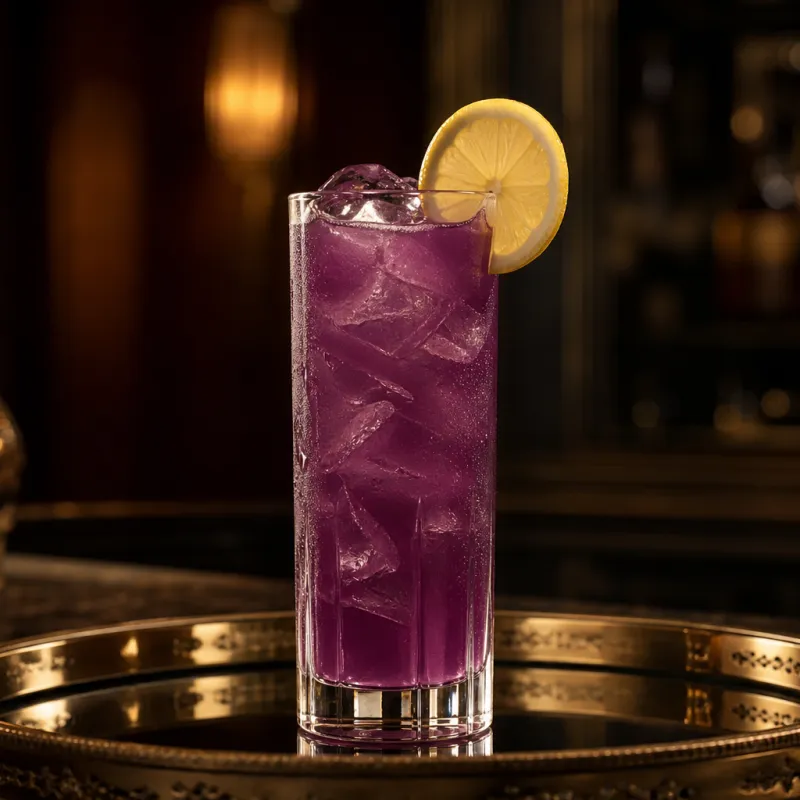
Electric blue, ice cold and fizzing, it looks like a swimming pool in a glass. Underneath is a simple, citrusy highball: vodka for backbone, blue curaçao for orange sweetness and lemonade for sparkle. A splash of fresh lemon keeps it from tasting like candy.
3.2Editors’ rating
Taste3.3
Balance3.1
Easy to make4.8
Popularity65
Reader rating: No reader ratings yet. Be the first.
Sweet and citrusy with orange notes from the curaçao and a crisp, fizzy finish. Light and very easy to drink.
History and origin
The Blue Lagoon is usually credited to Andy MacElhone, son of Harry MacElhone of Harry's New York Bar in Paris. Sources disagree on the date: some place it in 1960, others in the early 1970s. Either way, the drink is older than the 1980 film The Blue Lagoon, with which it is often linked.
It belongs to a wave of bright, easy highballs built around the striking colour of blue curaçao. In the 1980s and 1990s it became a fixture of holiday resorts and cocktail menus across Europe.
Bartender tips
In British and European recipes, lemonade means a clear lemon-lime soda; in the US, sparkling lemonade or lemon-lime soda both work.
Add 10 ml fresh lemon juice if your lemonade is very sweet.
Pour the soda last and stir only briefly to keep the bubbles.
Variations
Blue Lagoon shaken
Shake vodka, blue curaçao and 20 ml lemon juice, strain into a highball over ice and top with soda water for a drier version.
Blue Lagoon Mocktail
Mix non-alcoholic blue curaçao syrup with lemon juice and lemon-lime soda.
Frequently asked questions
Who invented the Blue Lagoon?
It is usually credited to Andy MacElhone at Harry's New York Bar in Paris, in the 1960s or early 1970s.
What can I use instead of lemonade?
Lemon-lime soda, sparkling lemonade or soda water with a little syrup and lemon juice.
Is the Blue Lagoon strong?
No. With 60 ml of spirits in a long drink, it is a light, refreshing highball.