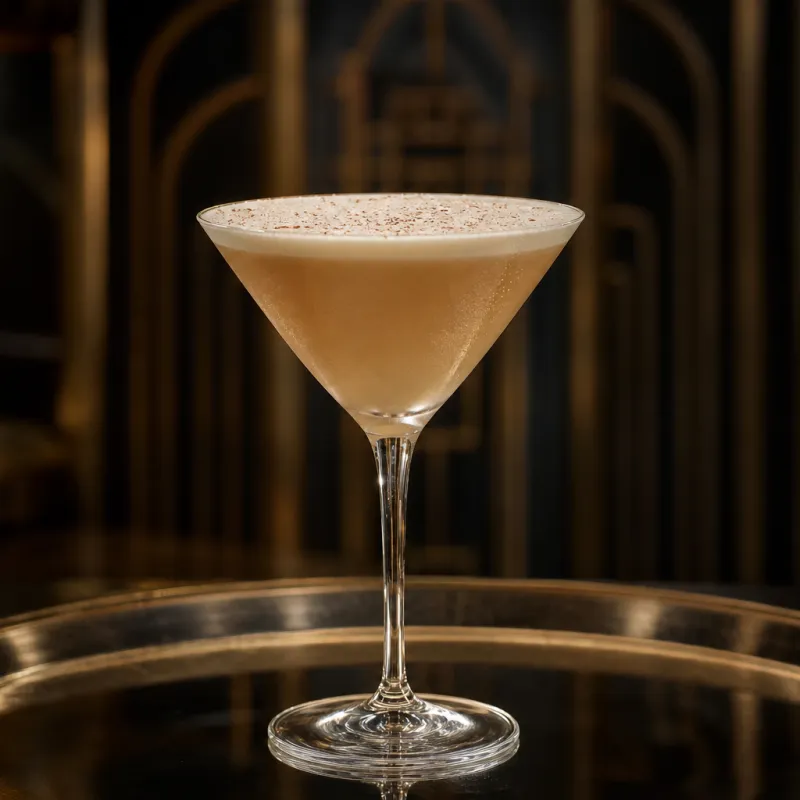
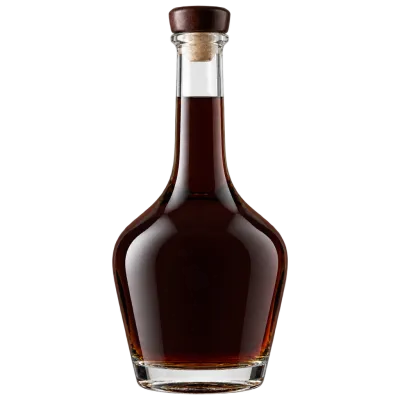
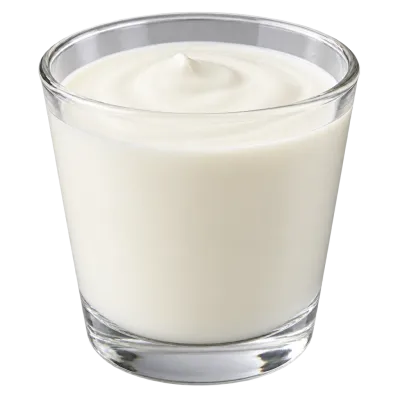
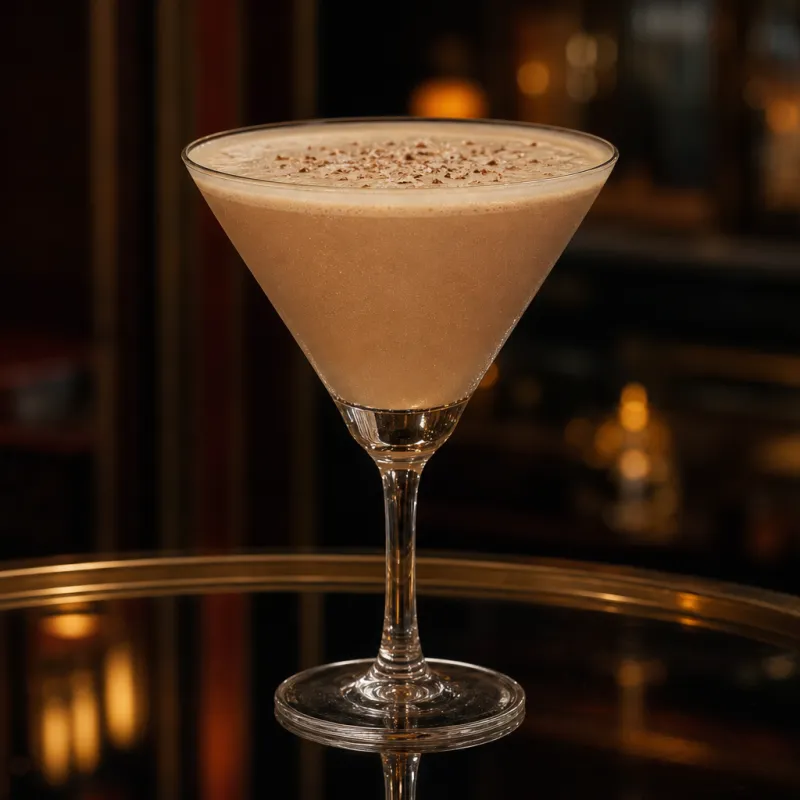
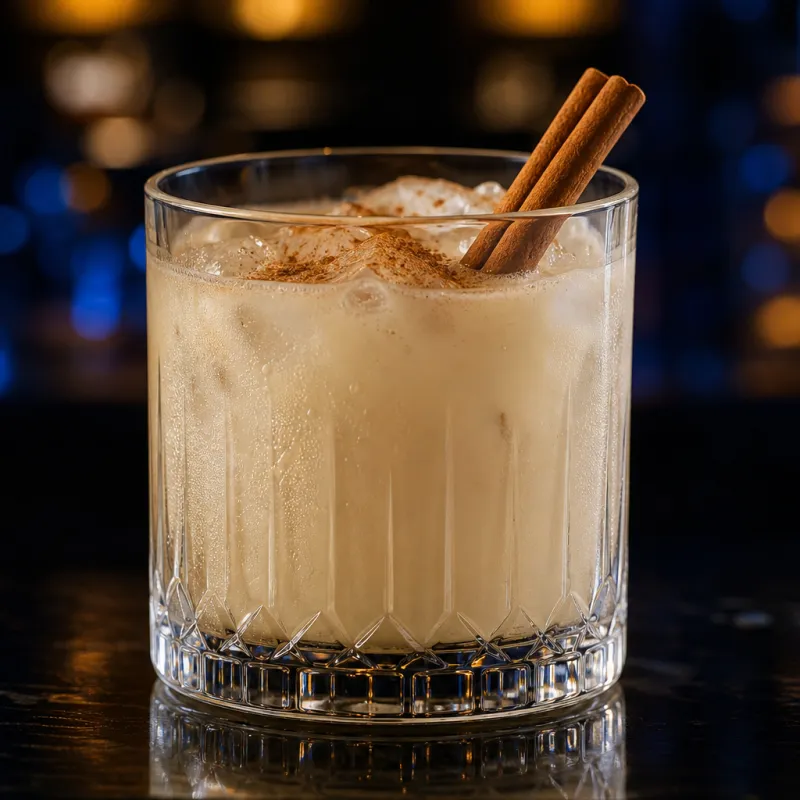
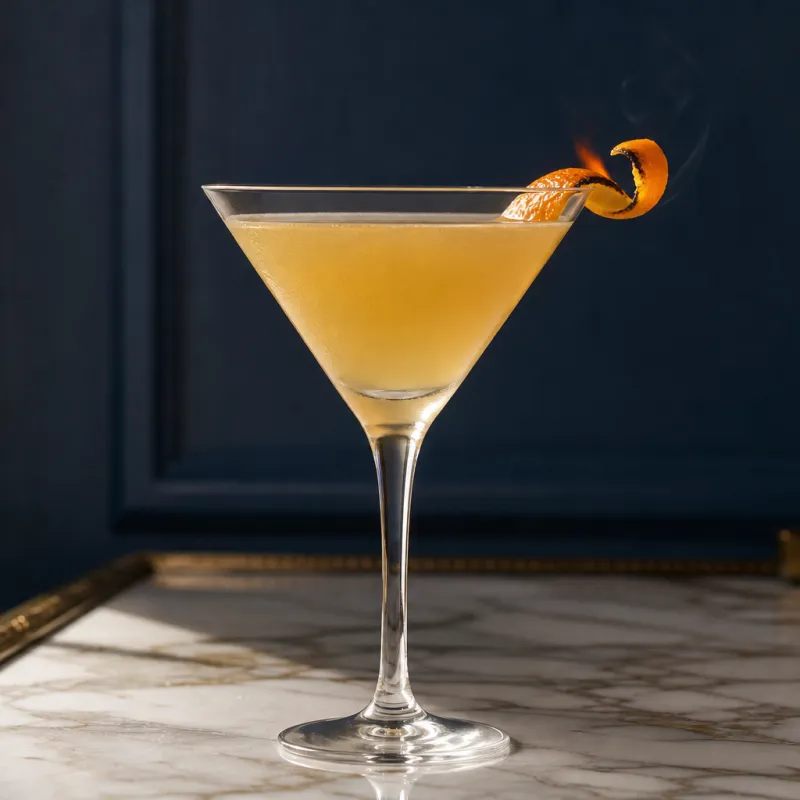
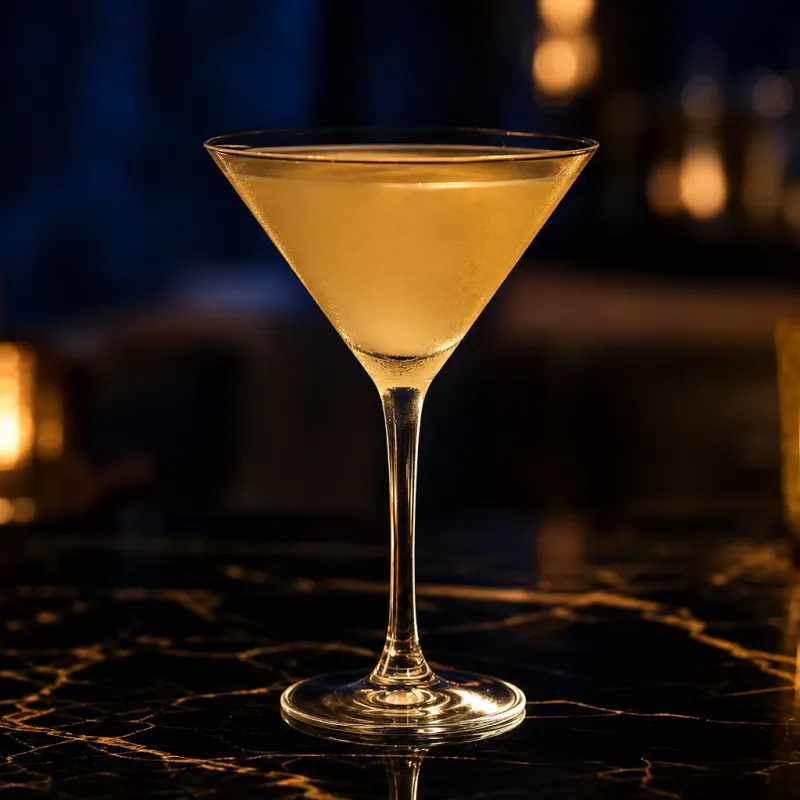
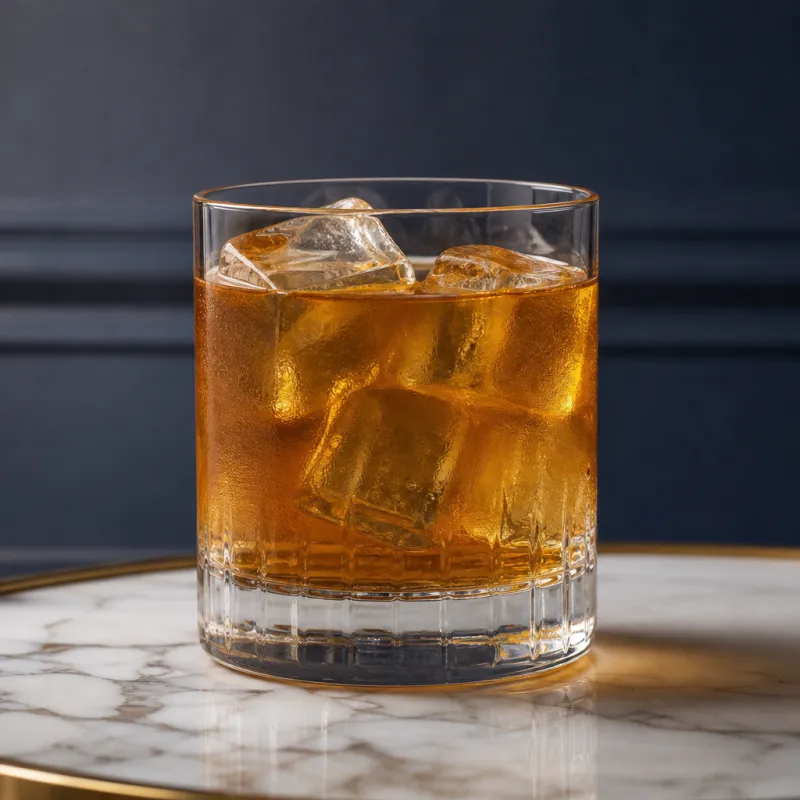
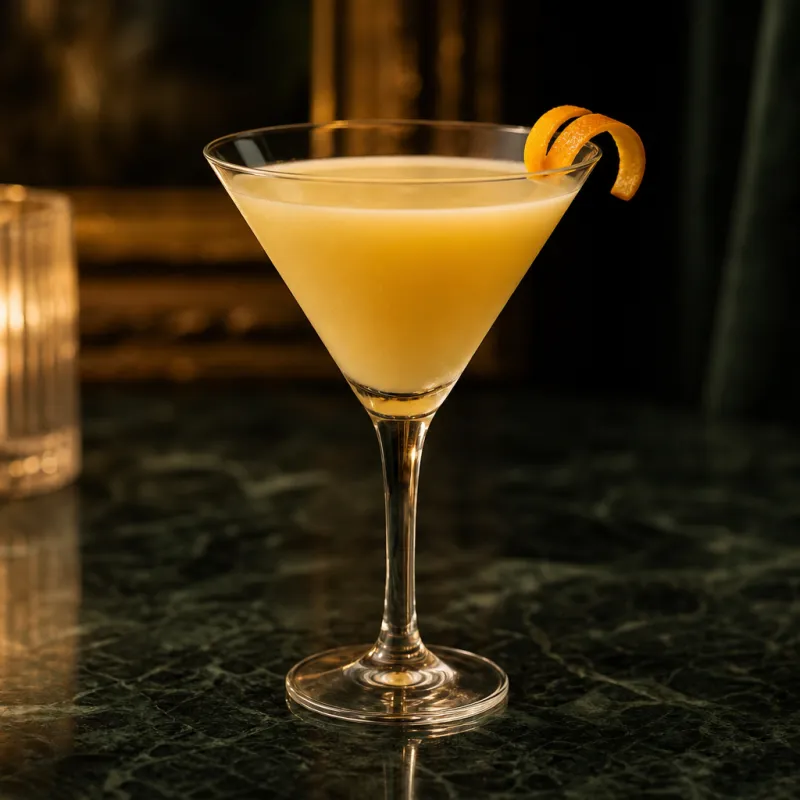
Fresh nutmeg on a pale, velvety surface, and underneath it cognac, chocolate liqueur and cream shaken to the texture of melted ice cream. This is dessert and digestif in one small, cold glass.
4.3Editors’ rating
Taste4.4
Balance4.3
Easy to make4.2
Popularity70
Reader rating: No reader ratings yet. Be the first.
Garnish: Freshly grated nutmeg · Ice: Served up, no ice
Method
Chill a cocktail glass.
Add cognac, crème de cacao and cream to a shaker filled with ice.
Shake hard for 12 to 15 seconds to aerate the cream.
Double strain into the chilled glass.
Grate a little fresh nutmeg over the top.
Link copied
Watch it made
Alexander (Brandy Alexander)
Taste
Smooth and creamy with dark chocolate, vanilla and warming cognac fruit, finished by fragrant nutmeg. Sweet but not heavy when shaken properly.
History and origin
The Alexander family of drinks goes back to the early 20th century. One of the earliest printed recipes appears in Hugo Ensslin's "Recipes for Mixed Drinks" (1916), and it calls for gin rather than brandy. Popular stories credit a New York bartender named Alexander, or link the drink to celebrations in London in the 1920s, but none of these accounts is firmly documented.
Over the following decades the brandy version overtook the gin original and became known simply as the Brandy Alexander. It was a fashionable after-dinner drink through the mid-20th century. The International Bartenders Association lists the Alexander among its "Unforgettables" with cognac, dark crème de cacao and fresh cream in equal parts.
Bartender tips
Always grate nutmeg fresh: pre-ground nutmeg tastes dusty and flat.
Use cream with around 30% fat. Heavier cream makes the drink stodgy, milk makes it thin.
Dark crème de cacao gives the classic caramel colour; white crème de cacao makes a paler but equally tasty drink.
Variations
Alexander (gin)
The early 20th-century original, made with gin instead of cognac.
Rum Alexander (twist)
Replace the cognac with dark rum for a spicier, more tropical version.