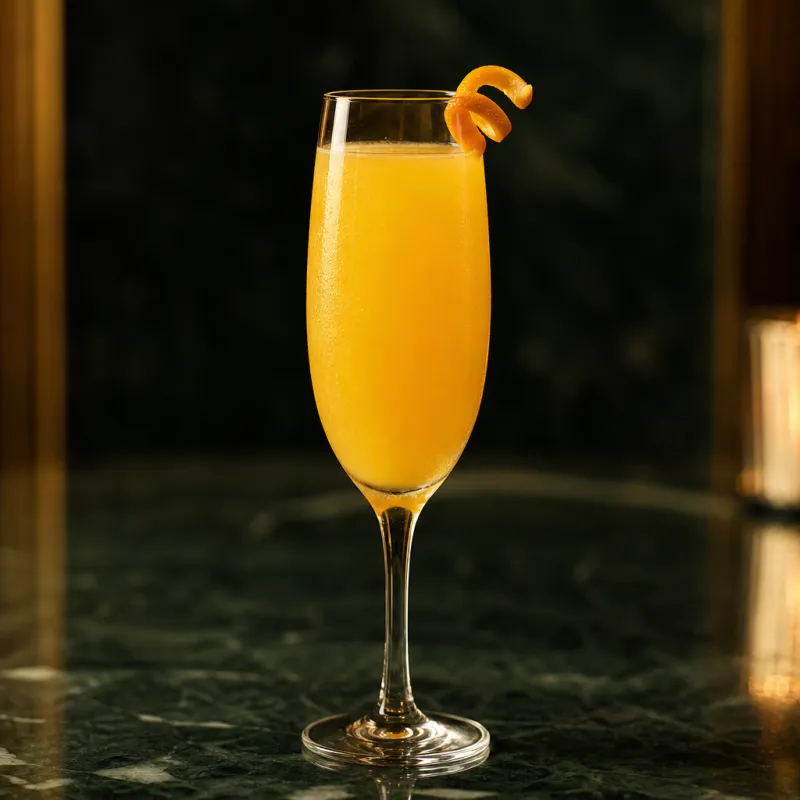
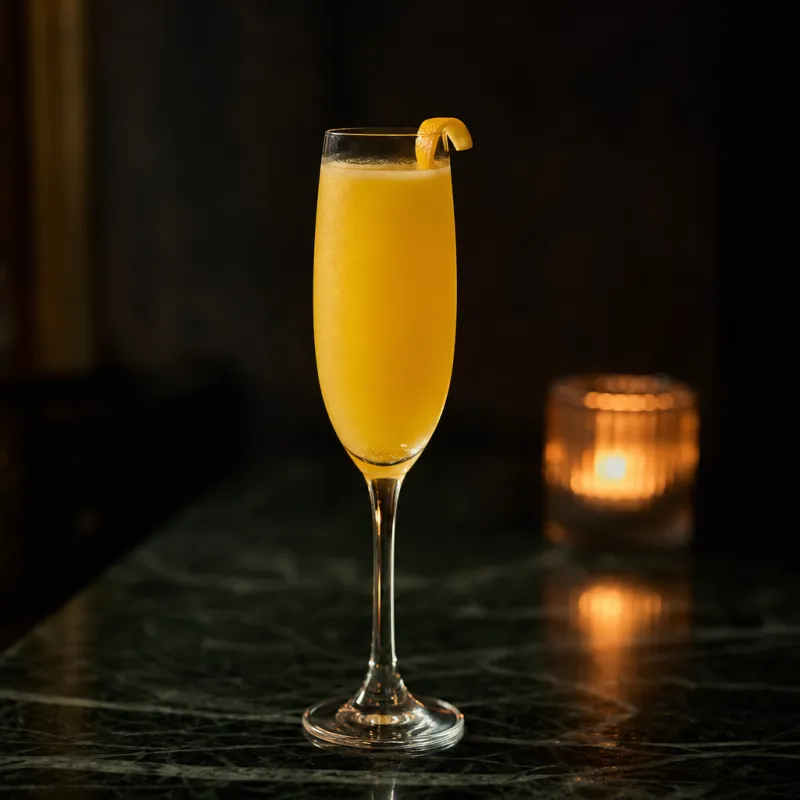
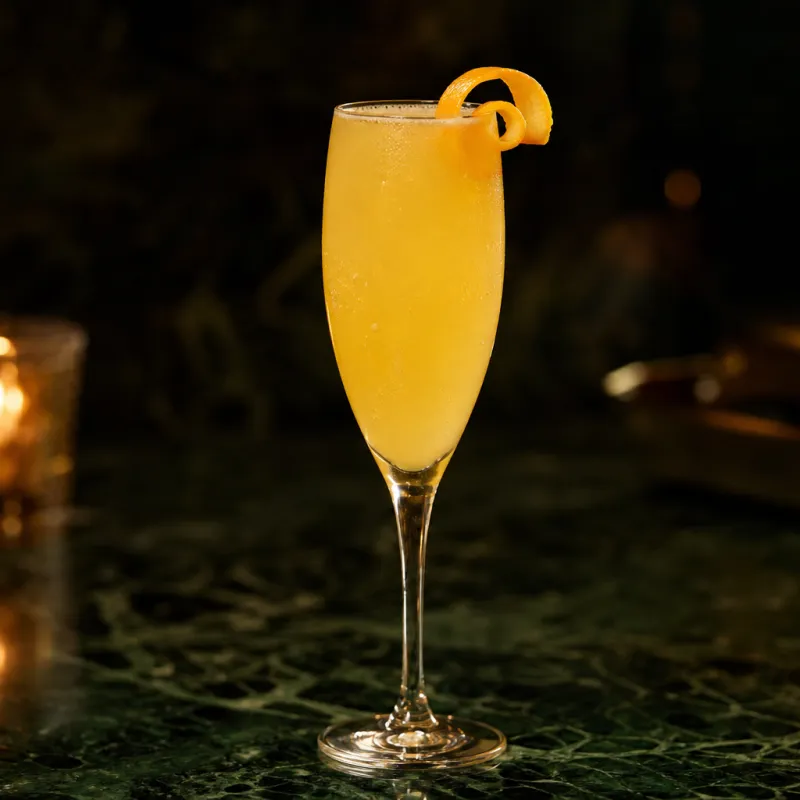
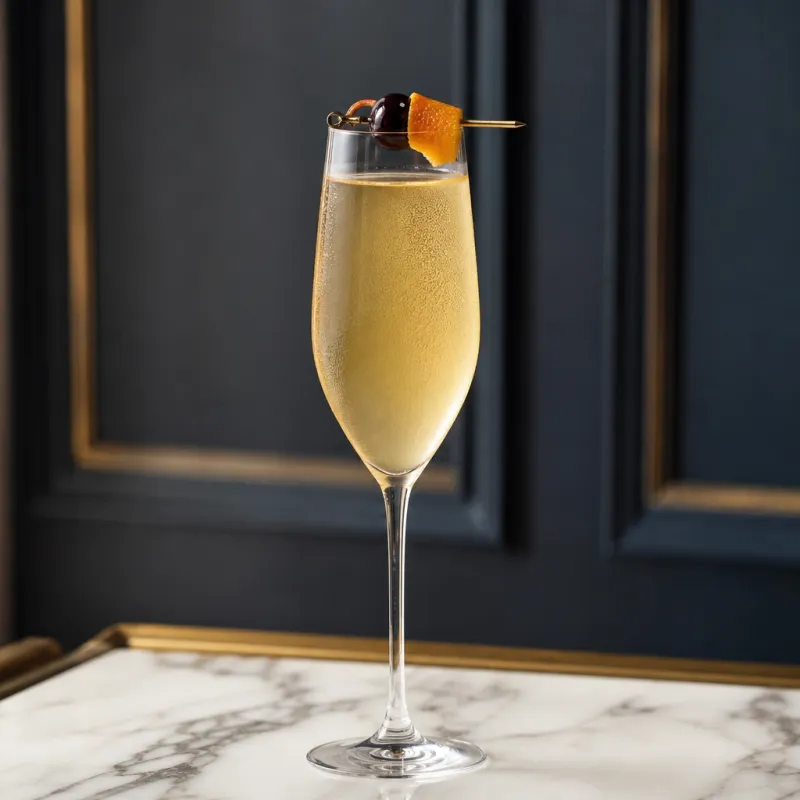
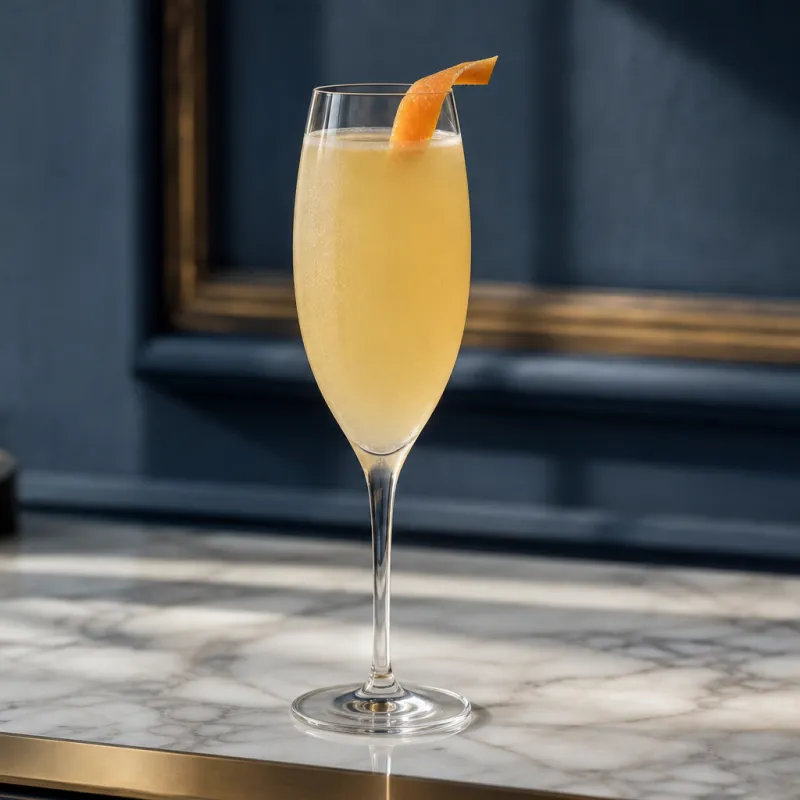
Sunny orange juice, fine bubbles and the toasty edge of good champagne. It takes thirty seconds to make, and on a slow Sunday morning very little beats it.
3.9Editors’ rating
Taste3.9
Balance3.9
Easy to make5
Popularity90
Reader rating: No reader ratings yet. Be the first.
Garnish: Orange twist (optional) · Ice: Served up, no ice
Method
Chill the flute, the champagne and the orange juice well in advance.
Pour the orange juice into the flute.
Top slowly with champagne, tilting the glass so it does not foam over.
Do not stir; if you like, garnish with a thin orange twist.
Link copied
Watch it made
Mimosa
Taste
Fresh, juicy and lightly sweet with soft acidity and a lively sparkle. Low in alcohol and very easy to drink.
History and origin
Orange juice and sparkling wine is such an obvious pairing that it is hard to credit anyone with inventing it. The story most often told places the Mimosa at the Ritz in Paris in the mid-1920s, where bartender Frank Meier is said to have served it; the name refers to the yellow mimosa flower. A close relative, the Buck's Fizz, is usually traced to the Buck's Club in London in 1921 and uses more sparkling wine and less juice.
In the decades since, the Mimosa has become the defining brunch drink, above all in the United States, where it sits alongside the Bloody Mary on weekend menus. The International Bartenders Association lists it among its Contemporary Classics with equal parts champagne and fresh orange juice.
Bartender tips
Freshly squeezed juice makes the biggest difference; strain out the pulp so the bubbles last.
Pour juice first and champagne second, slowly, to keep the foam under control and mix the drink naturally.
A dry cava, crémant or dry sekt is a fine and cheaper stand-in for champagne.