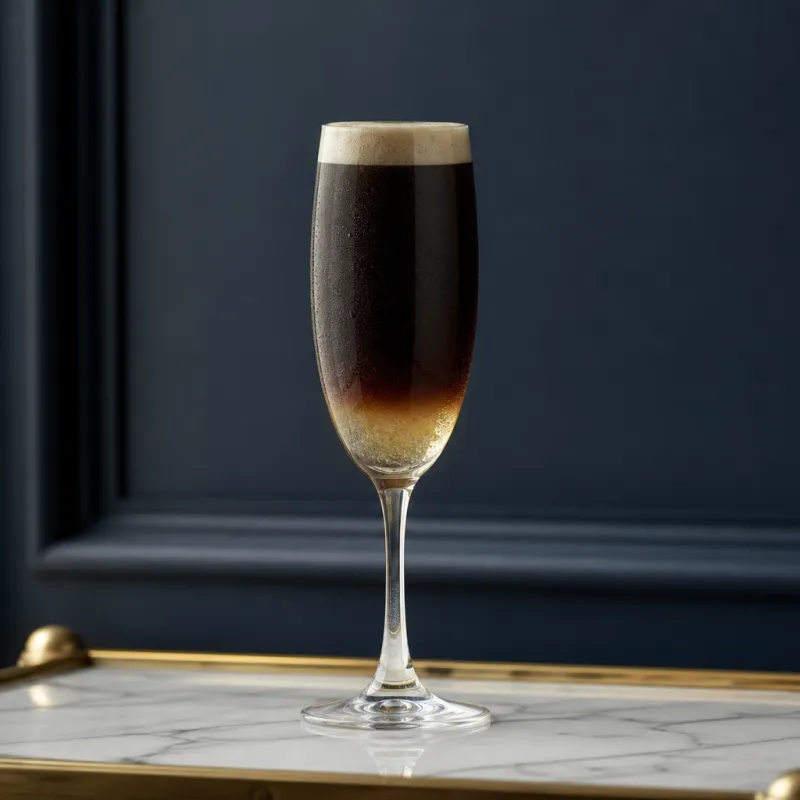
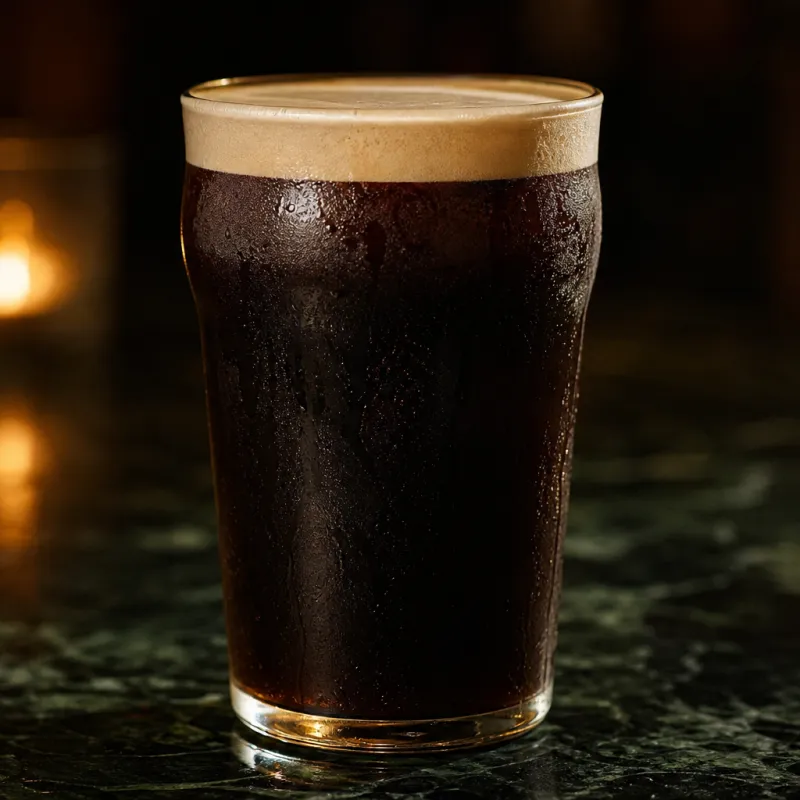
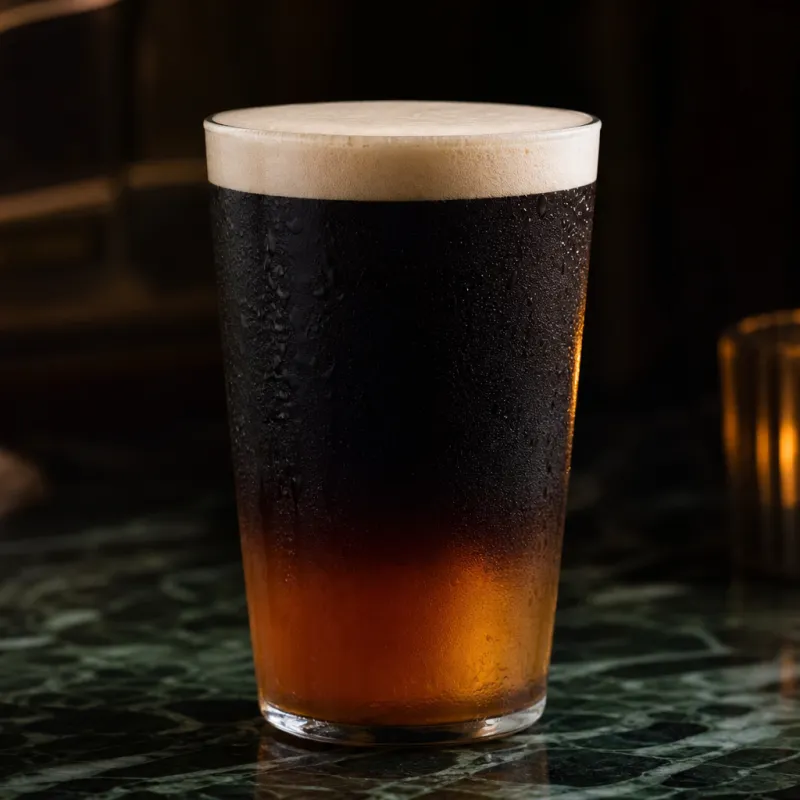
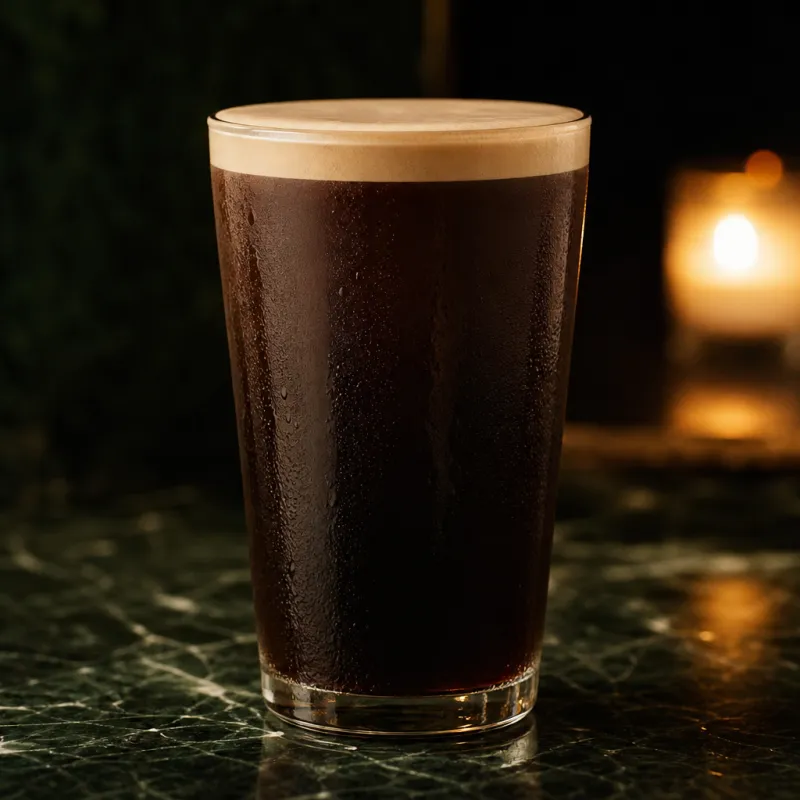
Bubbles from the wine, roast and creaminess from the stout, and a colour that drifts from ivory to near black. It sounds like an odd couple, yet the two meet somewhere between a dry sparkling wine and a very light, refreshing stout. Serve it icy cold, in a flute or a silver tankard.
4Editors’ rating
Taste4
Balance4
Easy to make4.9
Popularity40
Reader rating: No reader ratings yet. Be the first.
Chill both the stout and the sparkling wine thoroughly.
Pour the stout into a flute until it is half full and let the head settle.
Slowly top with Champagne, pouring over the back of a spoon for a layered look.
Serve at once.
Link copied
Watch it made
Black Velvet
Taste
Dry and gently roasted, with coffee and bread notes from the stout and a crisp, fine sparkle from the wine. Light-bodied and easy to drink.
History and origin
The Black Velvet is one of the few mixed drinks with a well-known origin story from the Victorian era. According to the popular account, it was first poured in 1861 at Brooks's, the London gentlemen's club, after the death of Prince Albert, husband of Queen Victoria. With the country in mourning, the steward is said to have dressed the Champagne in black by adding stout.
Whether or not every detail is true, the drink has been a British and Irish favourite ever since, often served at brunch or on festive occasions. Using a good dry sparkling wine instead of Champagne is completely accepted, and some pubs pour it with cider as a budget version.
Bartender tips
Pour the stout first; adding it second makes the drink foam over.
A brut or extra brut sparkling wine works best; sweet sparkling wines make it cloying.
For a party, pour in a tankard or pint glass with 150 ml of each.
Variations
Poor Man's Black Velvet
Replace the Champagne with dry cider, a common pub version in Britain and Ireland.
Black Velvet with prosecco
Use prosecco for a softer, fruitier drink.
Frequently asked questions
What is a Black Velvet made of?
Equal parts stout, usually Guinness, and Champagne or another dry sparkling wine.
Why is it called Black Velvet?
The name describes the dark colour and the soft, velvety texture; the popular story links it to mourning for Prince Albert in 1861.
Can I use sparkling wine instead of Champagne?
Yes. Any dry sparkling wine such as cava, crémant or a dry German Sekt works well.
The perfect sound
Velvet ballads
Dark stout meets champagne in a smooth, solemn toast.